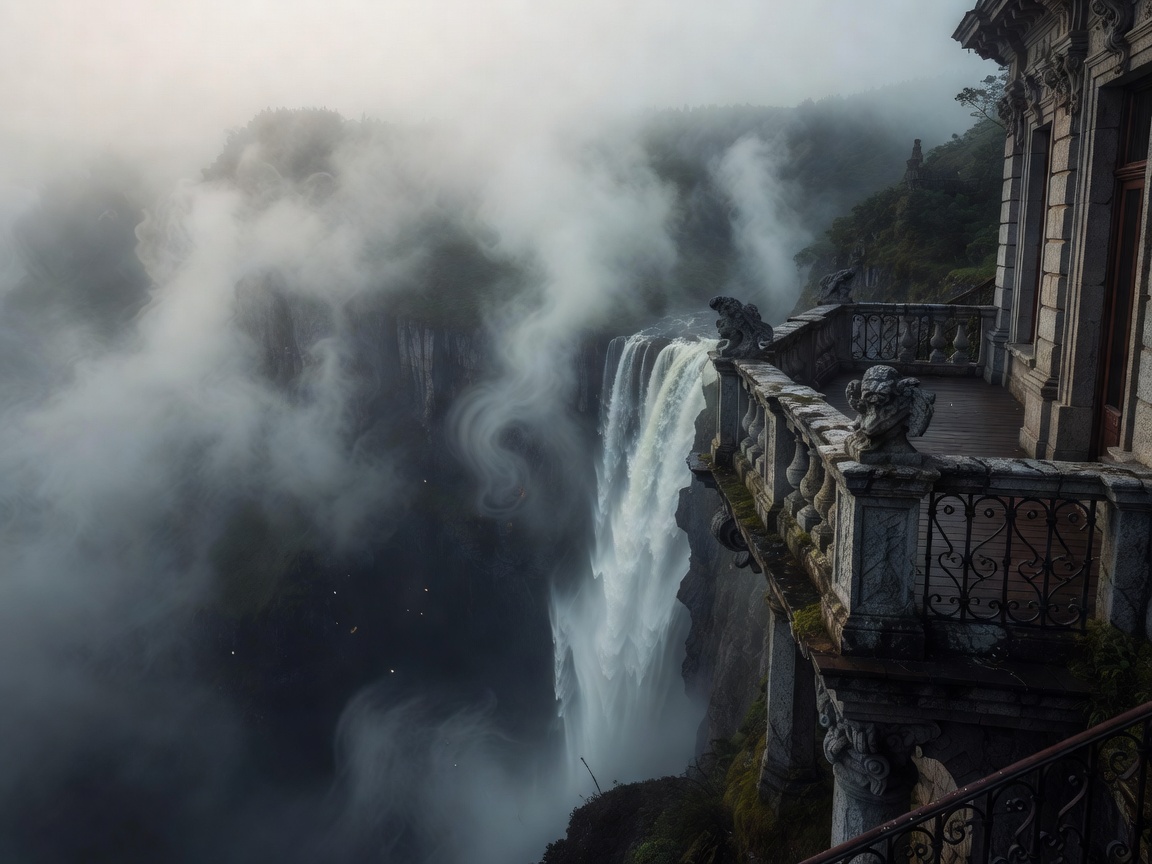
The Gilded Age of the Colombian Andes
In 1923, architect Carlos Arturo Tapias was commissioned to erect a private residential mansion on the edge of the Bogota River's dramatic precipice. By July 1928, the estate was converted into the luxurious Hotel del Salto. Constructed in the opulent French Renaissance style, it featured imported European ceramic tiles, polished walnut handrails, and gigantic panoramic leaded-glass windows looking directly out upon the 515-foot cascade.
During the 1930s and 1940s, the hotel became the mandatory salon for Bogotá's high society, foreign diplomats, and literary figures who arrived by train to enjoy brandy and live orchestral waltzes against the roaring backdrop of pristine white water.
The Double Fall: Toxicity and Darkness
The demise of this alpine sanctuary was swift and multifaceted. By the late 1960s, the rapid industrialization of the Bogotá metropolitan basin turned the once-sacred Bogotá River into an untreated industrial conduit. The pristine misty spray that once refreshed hotel guests became noxious and sulfurous. Guests stopped arriving as the surrounding air turned pungent and corrosive to interior metals.
Compounding the environmental disaster was the sheer precipice itself. The falls had historically been a sacred mythological jumping-off point in indigenous Muisca folklore, and during the mid-20th century, the abyss below the hotel attracted dozens of desperate individuals ending their lives. The hotel staff grew despondent, and sightings of apparitions became widespread in local news reports. By the early 1990s, the owners locked the grand oak entrance and abandoned the estate entirely.
Key Timeline & Architecture Facts
- Construction Period: 1923-1928 under architect Carlos Arturo Tapias.
- Geographical Setting: San Antonio del Tequendama, 30 km southwest of Bogotá.
- Vertical Cliff Height: 157 meters (515 feet) direct drop.
- Closure Date: 1991 (remained boarded up for over two decades).
- Modern Status: Renovated into the Tequendama Falls Museum of Biodiversity and Culture in the 2010s.
The Lingering Spirit of the Ruin
For more than twenty years, nature claimed the abandoned structure. Moss crept across the parquet dance floors, Andean vines coiled through smashed stained glass, and damp humidity rotted the French draperies. The ruin became an internationally famous urbex icon—an embodiment of gothic melancholy where human opulence proved helpless against environmental neglect.
Although recently stabilized as a cultural museum for biodiversity, walking its cantilevered balconies still elicits the profound chill of an era when luxury held court on the very brink of the void.
Read about the ecological cleanup and the Tequendama Foundation preservation projects.