The Coal-Fueled Speculation Dream
In the early 2000s, geologists realized that one-sixth of China's coal reserves and one-third of its natural gas lay directly beneath the Ordos Basin. Wealth flooded into the regional government overnight. Municipal planners formulated a grandiose plan: rather than modernizing the dusty, congested old city of Dongsheng, they would construct a glistening, futuristic administrative jewel 25 kilometers to the south, named Kangbashi.
With an initial budget surpassing $1.1 billion USD, developers cleared 355 square kilometers of scrubland. Renowned international and domestic architects were commissioned to construct avant-garde cultural wonders: the Ordos Museum designed by MAD Architects (resembling a giant undulating copper pod), a state-of-the-art library styled after leaning traditional Mongolian books, and an opera house mimicking a desert hat.
The Geometry of Absence
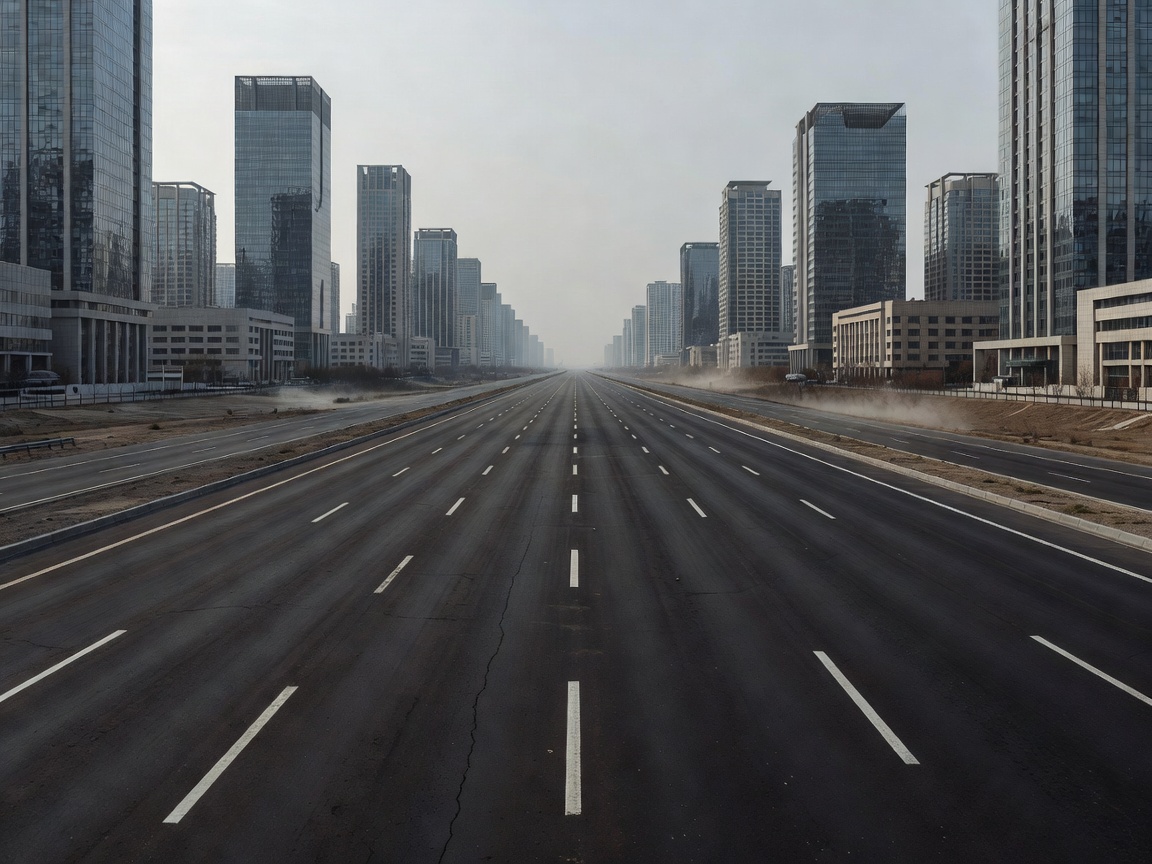
Walking through Kangbashi is a surreal cognitive disruption. The infrastructure is immaculate: perfectly paved eight-lane expressways, modern traffic lights changing colors for intersections without a single vehicle, subterranean drainage grids, manicured landscaping with robotic sprinklers, and row upon row of high-rise residential towers equipped with balconies and double-paned glass.
Yet upon closer inspection, the buildings are shells. Ground floors that were slated for gourmet bakeries, bank branches, and fashion boutiques sit behind papered windows or bare concrete pillars. Apartment units were purchased in cash during the speculative frenzy by coal barons and middle-class investors across Beijing and Hohhot who had no intention of relocating to an arid steppe outpost hundreds of miles from metropolitan employment centers.
Archival Statistical Summary: Kangbashi
- Original Masterplan Population: 1,000,000 projected inhabitants.
- Actual Initial Occupancy (2010): Less than 25,000 administrative workers (under 3% capacity).
- Key Architectural Landmark: The Ordos Museum by MAD Architects (finished in 2011).
- Current Reclamation Policy: Relocation of top-tier provincial high schools to attract families through educational incentives.
The Attempted Resuscitation
In recent years, the municipal administration has attempted aggressive revitalization policies. They forcibly relocated prestigious provincial secondary schools and university campuses into the district, knowing Chinese parents will follow the best testing academies at all costs. Government workers were offered subsidized condominiums with strict occupancy clauses.
While student populations have brought daylight activity to select micro-districts near the schools, vast quadrants of Kangbashi remain completely vacant. Blocks of tower complexes built in 2012 have begun showing structural wear from harsh Siberian winter cycles without ever having entertained a tenant, their paint peeling under sun and sand.
Read the architectural documentation of MAD Architects' Ordos Museum project.